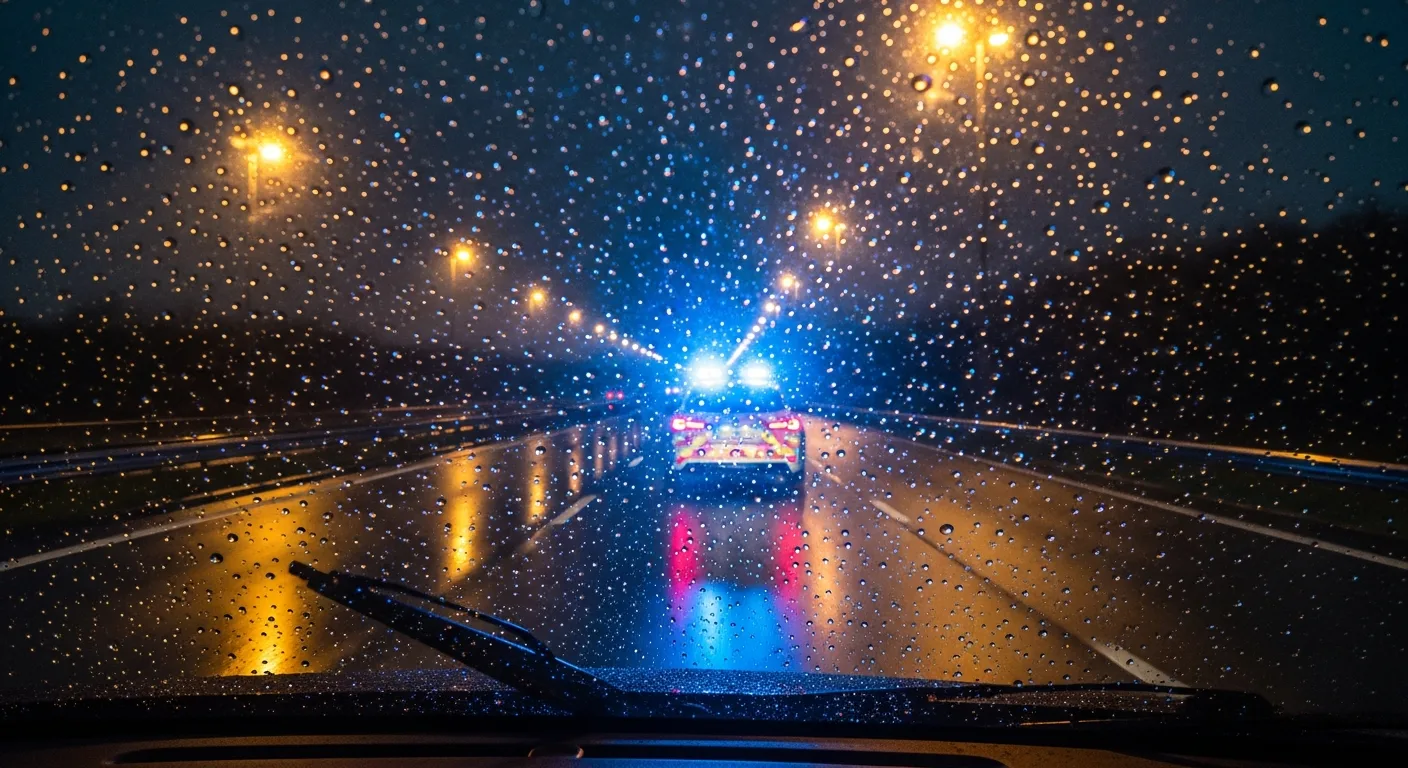
Type "police chase dash cam" into any video platform and you can lose an evening in seconds: pursuits threading motorway traffic, stolen cars cornering on the wrong side of the road, the strange calm of an officer's commentary as the speedometer climbs. The dash cam — in police cars, and increasingly in everyone else's — has turned the car chase from cinema fiction into a documented, everyday genre of real footage. Here's why this footage exists, why we can't stop watching it, and what the rest of us can actually learn from it.
How dash cams turned chases into public record
Police vehicles have carried cameras for decades, but three things transformed the genre. First, quality: modern in-car systems and consumer dash cams record at resolutions where you can read the road, not just sense it. Second, disclosure: UK forces now routinely release pursuit footage after convictions — as evidence of dangerous driving in court, and afterwards as a public warning that fleeing rarely ends well. Third, the rest of us: with millions of private dash cams on UK roads, a pursuit that passes through ordinary traffic is now filmed from half a dozen civilian windscreens too, each clip a different angle on the same thirty seconds.
The result is a strange new archive: real driving at its most extreme, captured with timestamps, speed data and the unblinking neutrality that makes dash cam footage such strong evidence in the first place.
The chases that grip us
Watch enough released pursuit footage and the same archetypes recur — each gripping for a different reason:
The motorway pursuit
High speed, multiple lanes, a helicopter somewhere overhead. What the footage actually shows, again and again, is discipline on one side and deterioration on the other: pursuit-trained drivers holding formation while the fleeing car burns through tyres, fuel and judgement. The endings are rarely cinematic — a controlled box of police vehicles slowing everything to a stop, a stinger deflating the drama lane by lane.
The urban cat-and-mouse
Tight streets, junctions, pedestrians — the footage that genuinely frightens, because the risk lands on bystanders. This is the category that most often ends pursuits early: UK forces weigh the danger of continuing against the danger of letting a suspect run, and footage shows commanders calling chases off when the maths turns bad. The restraint is its own kind of drama.
The low-speed standoff
The internet's guilty favourite: a suspect crawling along at walking pace, convoy in tow, refusing to stop but unable to flee. Absurd on screen — and instructive, because it shows how much of real pursuit work is patience rather than pace.
The civilian angle
Someone's commute, interrupted: blue lights blooming in a rear-view, a car threading past at speed, the pursuit pack following. These clips — from cameras like yours — increasingly end up as evidence, corroborating where a fleeing vehicle went and how it was driven. An ordinary driver's night-capable dash cam has become an accidental instrument of public record.
Why we watch
Partly the obvious: speed, stakes and story compressed into two minutes. But pursuit footage also scratches a rarer itch — it's proof. Not a stunt coordinator's fiction but actual physics: what really happens when a hatchback takes a roundabout at double the limit, how quickly wet tarmac withdraws its cooperation, how small the margins are that ordinary driving depends on. The footage is compelling precisely because the camera doesn't editorialise. It just shows you.
What chase footage teaches ordinary drivers
Beyond the spectacle, released pursuit footage is a free masterclass in things every driver should internalise:
- Speed shrinks time, not just distance. Watch any pursuit and count the near-misses per minute. The fleeing driver isn't unlucky; they've simply spent the time margin that normal speeds preserve.
- When blue lights appear: signal, move left, let them through. Don't brake sharply, don't stop mid-lane, don't try to outrun the situation to the next junction. Chase clips are full of civilian cars doing exactly the right thing — early, predictable, boring moves.
- Never follow the action. A pursuit is not content to chase for your own channel. Keep your distance, drive on, and let your dash cam record whatever passes without you becoming part of the incident.
- If your footage caught something, submit it properly. Pursuit-adjacent clips — the dangerous overtake before the police arrived, the fleeing car's plate — belong with the force, not just the group chat. The process takes minutes: see how to submit footage to UK police.
- And never re-enact any of it. The same cameras that make chase footage compelling make dangerous driving effortless to prosecute. The genre's real moral is on the last frame of every released clip: they were caught, and the video did the convicting.
The camera in your own windscreen
You'll probably never film a pursuit. But the reasons chase footage works — resolution that reads plates at speed, night modes that keep dark roads legible, GPS that timestamps every frame, recording that starts itself — are exactly the qualities that protect you in the incidents you are statistically due: the pull-out, the tailgater, the car park mystery dent. The same unblinking witness, pointed at your ordinary Tuesday. If this article is what finally convinces you to fit one, start with the buying guide — and check the legal basics before you mount it.
The short version
- Police-released and civilian dash cam footage has made real pursuits a documented public genre — and a courtroom staple.
- The recurring lesson across every clip: margins vanish with speed, and the camera never blinks.
- Blue lights behind you? Left, early, predictable. Footage of something serious? Portal, not social media.
The best chase footage ends the same way for the viewer every time: you close the app, walk to the car, and drive home a little more carefully — with your own quiet witness watching the road ahead.