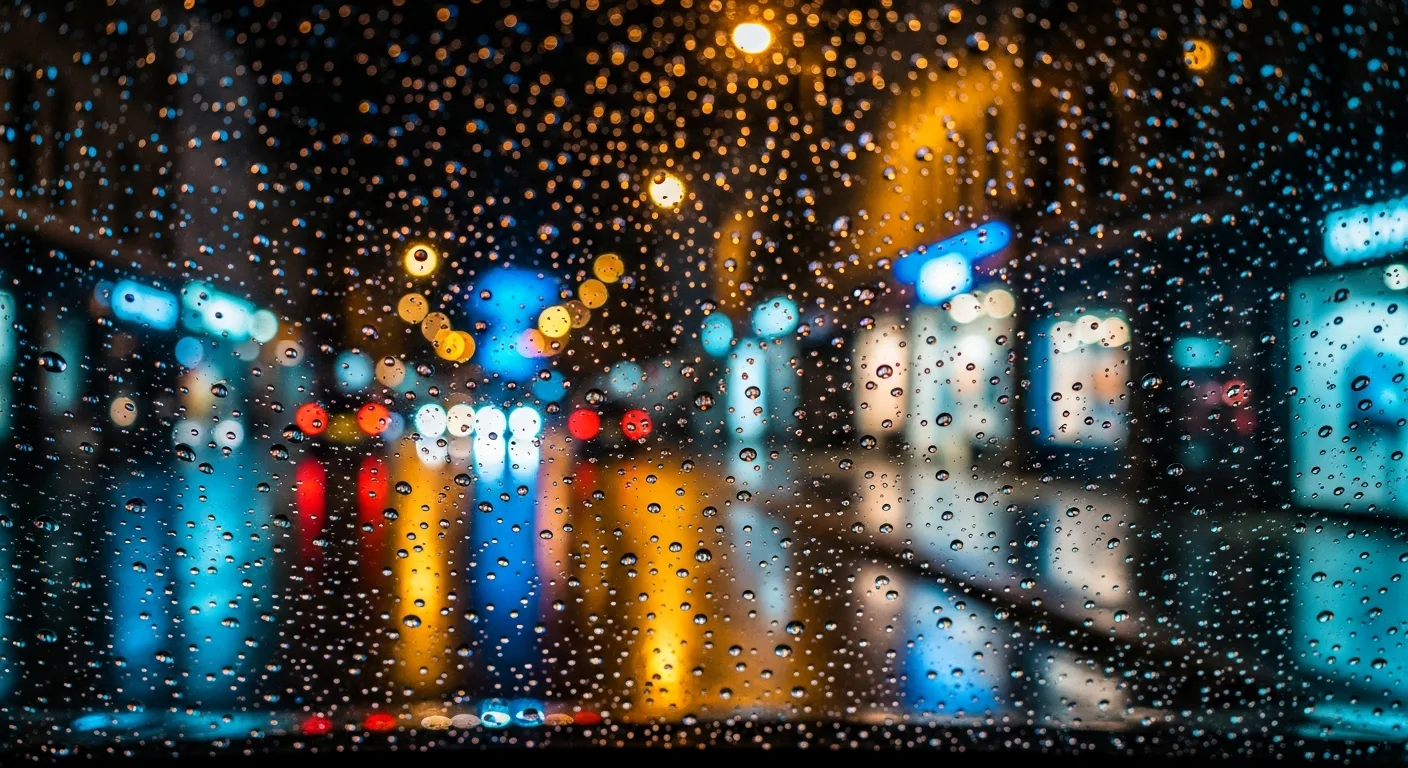
Here's an awkward statistic of dash cam ownership: the conditions in which incidents are most likely — darkness, rain, dazzle — are precisely the conditions in which cheap cameras produce their worst footage. A camera that's superb at noon and useless at 11pm is half a camera, especially through a British winter of dark commutes. This guide covers what makes night footage good, and the habits that make any camera perform better after sunset.
Why night footage fails
Three physics problems stack up after dark:
- Not enough light. The sensor has to amplify a weak signal, which is where grain ("noise") comes from — detail dissolves into speckle.
- Too much light in the wrong places. Headlights, brake lights and shop signs blow out into blooming white patches; number plates, brightly lit by your own headlights against a dark background, overexpose into unreadable rectangles.
- Motion blur. To gather more light the camera slows its shutter; anything moving — including everything you drive past — smears.
Good night performance is the art of balancing those three against each other, and it's decided by hardware more than software promises.
What actually makes a camera good at night
- Sensor size and pixel size. Bigger photosites gather more light per pixel. This is why flagship cameras advertise the sensor, not just the megapixels — and why a quality 1440p unit can out-shoot a bargain "4K" one at night. The Nextbase 622GW's Enhanced Night Mode leans on exactly this: larger effective sensor pixels for cleaner low-light frames.
- A bright lens. A wide aperture (lower f-number, e.g. f/1.3) is a permanent, every-frame light advantage. Glass beats algorithms.
- Sensible processing. Dedicated night modes tune exposure and noise reduction for darkness. Beware over-aggressive "brightening" that turns night into smeary grey soup — test footage on the manufacturer's own published clips before buying.
- A polarising filter cuts windscreen reflections — your dashboard ghosted onto the glass is a classic night-footage spoiler. Built into some cameras (the 622GW included), available as an accessory for others.
- Resolution still matters — noise reduction eats fine detail, so starting with more pixels preserves more plate-reading ability. The trade-offs are unpacked in the 4K guide.
Habits that improve any camera's night footage
Free upgrades, in descending order of impact:
- Clean the windscreen — inside as well as out. The interior film of plasticiser haze scatters every light source into halos. Five minutes with glass cleaner transforms night clips more than any setting; it's step one of the maintenance routine.
- Keep the lens spotless and the glass in front of it inside the wiper sweep — a correctly placed mount earns its keep at night.
- Fresh wiper blades. Smeared rain at night is the single worst input you can feed a camera.
- Align your headlights and use them properly. The camera sees what you illuminate. Misaligned or grimy headlights starve it.
- Dim aggressive interior lighting — bright infotainment screens reflect in the glass; the polariser helps, but so does the dimmer.
Reading night footage honestly
Even excellent night video behaves differently from daytime video, and it pays to know what to expect before you need a clip:
- Plates read best when close and square-on — at distance or an angle, headlight glare wins more often at night. Context (vehicle model, colour, damage, direction) still identifies vehicles.
- Streetlit urban roads record far better than unlit rural ones; on the latter, your headlights are the only cinematographer.
- Timestamps and GPS data carry extra weight at night, when visual landmarks are weaker — one more reason the data layer matters.
Winter-specific notes for UK drivers
- Demist fully before setting off — a camera filming through fogged glass records fog, and the first five minutes of a winter commute are prime incident time.
- Low winter sun is the daytime equivalent of dazzle: the polarising filter and a clean screen fight it too.
- Cold saps small batteries; a camera on proper power (socket or hardwired) avoids winter flakiness.
The short version
- Night quality is bought with sensor size, a bright lens and a polariser — not megapixel labels.
- The free upgrade: immaculate glass, inside and out, plus fresh wipers.
- Expect context-rich footage rather than guaranteed plates at distance — and let GPS data shoulder part of the evidential load.
If your driving life includes dark commutes — and in Britain, whose doesn't from November to February — weight night performance heavily in the buying decision. It's the difference between footage you have and footage you can use.