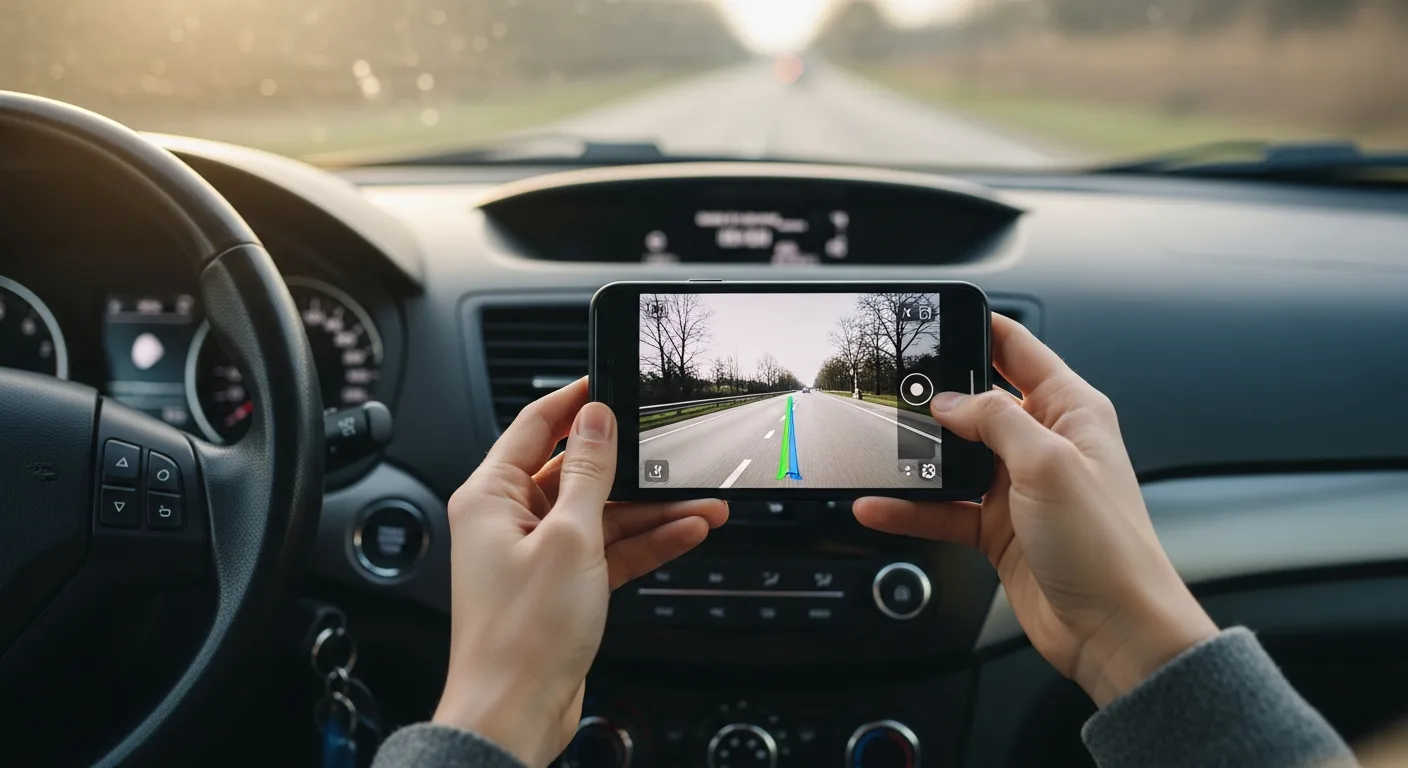
In the seconds after a collision, nobody is thinking about file management. But what you do — and don't do — with your dash cam in the following minutes decides whether you have compelling evidence or an anecdote. This is the practical guide: how to preserve a clip, what makes footage persuasive to insurers and courts, and the handling mistakes that quietly ruin good evidence.
First: understand how your camera deletes things
Dash cams loop-record — when the card fills, the oldest unprotected files are overwritten. Most cameras auto-protect a clip when their G-sensor detects a significant impact, but auto-protection is not guaranteed, especially for low-speed bumps, near-misses, or incidents you witnessed rather than felt. Assume nothing: if a clip matters, protect it yourself.
At the scene: the two-minute evidence routine
Once everyone is safe and the immediate priorities (checking for injuries, exchanging details, calling 999 where needed) are handled:
- Protect the clip on the camera — the button with a padlock or shield icon on most units — or, better, transfer it to your phone over the camera's Wi-Fi app there and then. A copy on your phone is immune to card failure, theft of the camera, and your own later fumbles.
- Don't unplug or fiddle unnecessarily. If the camera is still recording, let it — the aftermath (the other driver's behaviour, their passengers switching seats, admissions of fault) is often as useful as the impact.
- Photograph the scene anyway. Positions, damage, road markings, weather. Footage plus photos beats either alone.
- Note what the camera can't see: names, insurance details, witnesses' contacts, what was said.
What makes footage persuasive
Insurers and courts see a lot of video. The clips that settle matters share traits:
- Continuity. The clip starts before the incident and runs past it. Thirty seconds of context either side shows speeds, signals and behaviour — a tightly cropped moment invites "what happened before you started the clip?"
- Original files. The video as the camera wrote it: original resolution, original filename, embedded timestamp, no re-encoding, no edits. Send copies of the original, keep the original itself untouched.
- Accurate metadata. A correct clock matters more than people realise — a timestamp two hours off invites doubt about everything else. Check the camera's time after clock changes (part of the monthly maintenance habit).
- Supporting data. GPS speed and position embedded in the recording turns assertions into measurements.
The mistakes that damage good evidence
- Editing. Never trim, caption, brighten, stabilise or "enhance" the file you submit. Any processing — however innocent — gives the other side a lever. Editing for your own review is fine; what you hand over must be the original.
- Posting it online. Publishing the clip before proceedings conclude can prejudice a police case, inflame a civil dispute and create privacy problems. Report first, and preferably don't post at all.
- Letting it get overwritten. The saddest sentence in dash cam ownership: "it was on there, but I drove for a week and it's gone."
- Selective disclosure. If footage exists, be straightforward about it. Producing a clip only when it favours you — after denying you had one — destroys credibility fast.
Where to send it
To your insurer
Tell them footage exists when you first report the claim; they'll give you an upload route. Clear video shortens liability arguments dramatically — the financial mechanics are covered in dash cams and insurance.
To the police
For dangerous driving you witnessed, use your force's portal promptly — the process and the critical 14-day window are explained in the police submission guide. For collisions the police attend, tell the officer at the scene that you have footage; they'll tell you how they want it.
To a solicitor
In injury or high-value disputes, your solicitor will want the original file plus a copy, with a note of who has handled it and when — a simple email trail is usually enough to show the footage's history.
Storage discipline after the event
- Keep two copies of the original: one on your computer or cloud storage, one untouched on the protected card or phone until the matter fully concludes (claims can reopen months later).
- Name the stored copy usefully — date, location, incident — and keep the camera's original filename in a note alongside.
- Only then format the card and return it to service.
The short version
- Protect, then transfer to your phone, at the scene. Loop recording forgives nothing.
- Submit originals: unedited, timestamped, with context either side of the moment.
- Insurer first, police portal within days, everything disclosed honestly.
- Two copies until the file is truly closed.
A dash cam's value is decided in the two minutes after the incident and the two days that follow. Build the habit now — and if you're still choosing the camera that will do the recording, start with the buying guide.