"Will a dash cam cut my premium?" is usually the first insurance question — and it's the wrong one to lead with. The honest answer on discounts is sometimes, modestly. The bigger financial story is what footage does after an incident: to liability, to fraud, to the speed of a claim, and to the no-claims bonus you've spent years building. Let's take it in order of real-world value.
Premium discounts: the modest bit
Some UK insurers offer a discount for a fitted dash cam, either directly or through partnerships with camera brands; others offer nothing at all. Where discounts exist they vary by insurer and change with the market — so treat any specific percentage you read online as out of date, and simply ask your insurer (and comparison quotes) whether a camera changes the price. Two practical notes:
- Declare it accurately if asked. If an insurer prices your policy on the basis of a camera being fitted, it needs to actually be fitted and working.
- Don't buy a camera for the discount. On typical premiums the saving alone rarely justifies the hardware. Buy it for what follows.
Liability disputes: where footage earns its keep
The expensive insurance outcome isn't a slightly higher premium — it's a 50/50 liability split on a collision that wasn't your fault, because it came down to your word against theirs. A split fault claim can cost you your no-claims discount, your excess and years of higher premiums.
Dash cam footage collapses those disputes. Who was in which lane, who signalled, who ran the amber, what speed you were doing (with GPS data attached) — the questions that used to take weeks of correspondence get answered in ninety seconds of video. Insurers accept dash cam evidence as standard, and clear footage routinely converts "disputed" into "non-fault", which is the difference between your insurer recovering costs from the other side and you carrying the consequences.
Fraud: the crash-for-cash defence
Induced collisions — a driver deliberately braking hard so you hit them, often with exaggerated injury claims to follow — are a persistent, well-documented fraud pattern on UK roads. They're engineered to look like your fault, because rear-end collisions usually are.
This is the scenario where a dash cam pays for itself many times over in one afternoon. Footage showing the vehicle overtaking, pulling in and braking for no reason dismantles the claim — and insurers' fraud teams act on exactly this kind of evidence. If you drive in stop-start urban traffic, this alone is a sufficient reason to fit a camera; pair it with the reasoning in front vs rear, because staged incidents involve the rear of your car by design.
Parked-car damage: the anonymous epidemic
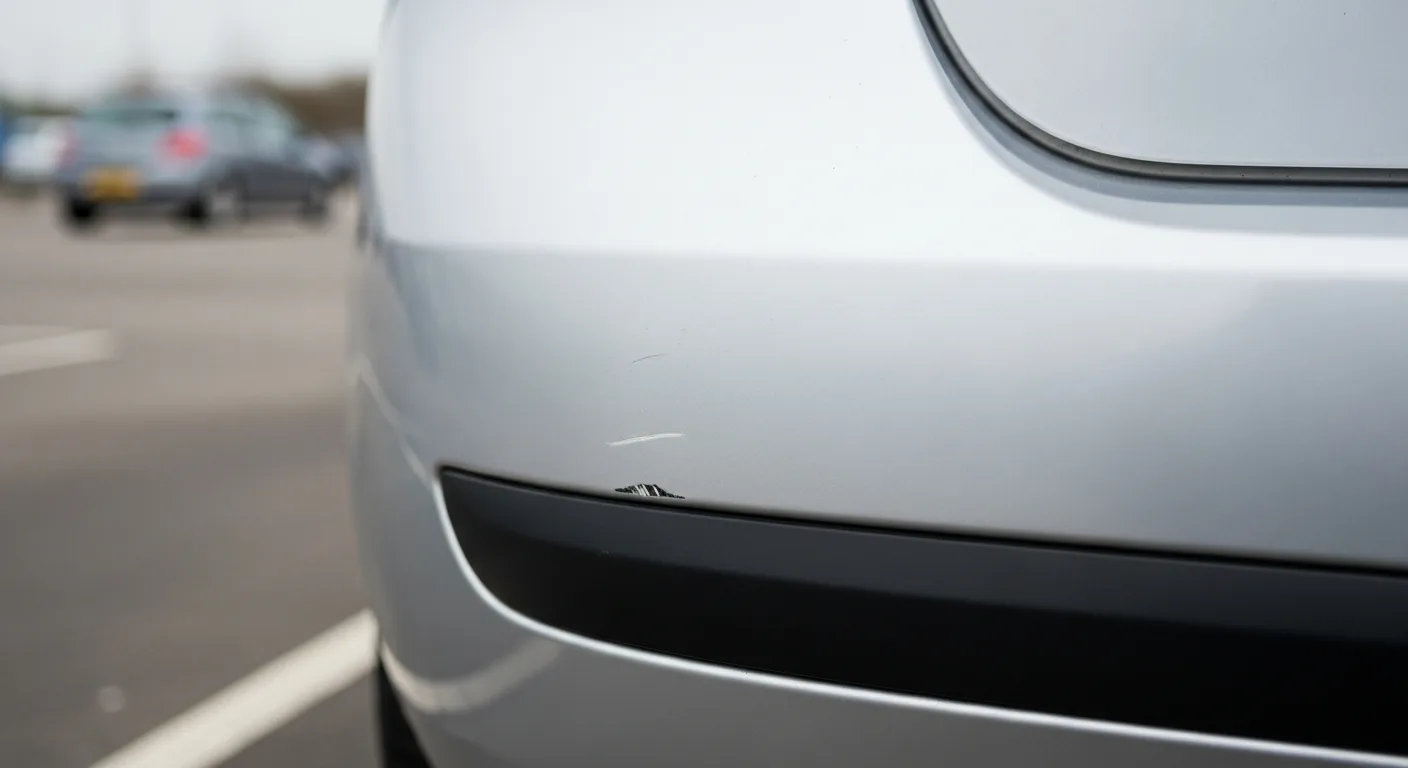
Come back to a dented wing and no note, and you're left claiming on your own policy — excess paid, no-claims at risk — for someone else's dishonesty. A camera with parking mode can capture the impact and, with luck, the plate. That converts an own-fault claim into a recoverable one. Given how much of a car's life is spent parked, this is one of the most common ways owners actually use their footage.
Claims speed and stress
Even in undisputed claims, footage shortens the process: less back-and-forth about circumstances, faster liability decisions, fewer opportunities for the other side's account to drift. After a genuinely frightening incident, being able to hand over an objective record — rather than reconstructing it from adrenaline-soaked memory — is worth more than any discount. Follow the steps in the evidence guide to make sure the clip survives and reaches your insurer intact.
What footage won't do
Balance, as ever:
- It won't rescue bad driving. Footage is neutral — if the video shows you tailgating, it shows you tailgating. (In practice, camera owners report driving more carefully; the witness in the windscreen works both ways.)
- It won't always capture the plate. Angles, distance and darkness are real constraints — which is the argument for decent resolution and night performance, not against cameras.
- It doesn't replace disclosure. A camera changes evidence, not your duty to answer insurers' questions honestly.
The short version
- Ask your insurer about a discount, but treat it as a bonus, not the point.
- The real value: winning liability disputes, defeating staged claims, and catching parked-car damage — each protecting your excess and no-claims bonus.
- Protect the clip immediately after any incident and submit it with the claim.
Think of a dash cam not as a discount voucher but as insurance for your insurance: the device that decides whether the paperwork after a bad day goes your way. If you're choosing hardware for the job, the buying guide sets out what matters.