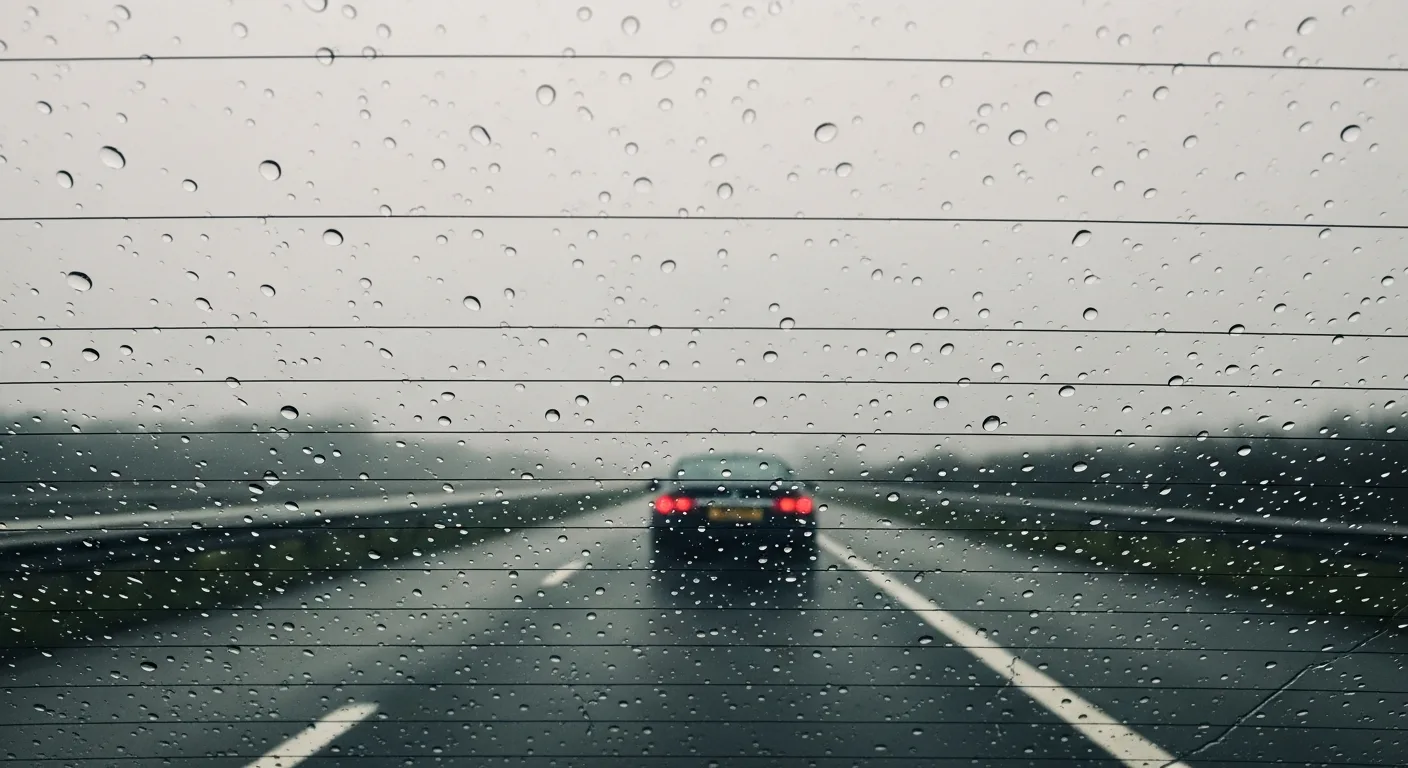
Most people's first dash cam is a single front-facing unit, and for good reason: it covers the direction you're travelling, the traffic you're reacting to, and the majority of collision types. But ask anyone who has been rear-ended at a roundabout what they wish they'd had, and the answer is instant. Here's how to decide — honestly — whether you need a second camera.
What a front camera covers
A front camera watches the road ahead: vehicles pulling out, lane changes, traffic lights, junctions and everything you're about to hit or avoid. In any collision where you ran into something, or something crossed your path, the front camera tells the story. It also captures the wider context that matters in disputes — your speed (with GPS), your lane discipline, the conditions.
What it completely misses
Everything behind the B-pillar. Which is unfortunate, because the rear is where some of the most contested — and most common — incidents happen:
- Rear-end shunts. The classic "they hit me from behind" is usually clear-cut on liability, but not always: was there brake-checking? Did you reverse? A rear camera removes the ambiguity in both directions.
- Tailgating. A front camera can't show the van sitting a metre off your bumper for six miles.
- Parking damage. Cars are far more often clipped at the rear corners while parked. A front-only setup guards half the car; paired with parking mode, a rear camera covers the most vulnerable end.
- Reversing incidents. Car parks, driveways, tight streets — low speed, high dispute rate.
The honest case for staying front-only
Two cameras aren't automatically better for everyone. Front-only remains a reasonable choice when:
- Budget is fixed. A quality front camera beats two mediocre ones every time. Spend on the front sensor first — it faces the majority of incidents.
- You park off-street. A private driveway or garage removes much of the rear camera's parking-guard value.
- Your mileage is low and local. Less exposure, fewer motorway tailgaters, fewer opportunities for the rear-facing incident types.
- You want the simplest install. One unit, one cable, fifteen minutes. A rear camera adds a cable run the length of the cabin — very doable, but more involved; see the fitting guide.
The case for front and rear
Add the rear camera when your risk profile actually includes the rear:
- You commute in stop-start traffic, where rear-end collisions cluster.
- You park on the street, at stations, or in busy public car parks.
- You've already experienced the misery of unattributed rear damage.
- You tow, or drive something tailgaters love to sit behind.
There's also a quieter benefit: completeness. Insurers and police act fastest on footage that shows the whole event without gaps. Front plus rear turns "my word, partially corroborated" into "here is the entire incident from both ends".
Modular systems: the best of both routes
You don't have to decide everything on day one. Modular designs — the Nextbase 622GW among them — let you start with a front unit and clip in a rear module later: a Rear Window Camera covering the traffic behind, a Rear View Camera on the unit itself, or a Cabin View Camera for anyone carrying passengers professionally. The rear module records in sync with the front, so clips pair automatically rather than living as two separate files from two separate devices.
If you're choosing a first camera now and think a rear view might matter within the car's lifetime, modularity is worth prioritising — it's far cleaner than running a second brand's camera with its own app, card and power feed.
Image quality expectations for the rear
Rear modules typically record at 1080p — lower than a 4K front unit, and that's fine. Rear incidents happen close: the tailgater is metres away, the shunt happens at your bumper. What matters more is night performance (headlight glare is the rear camera's enemy) and a clean rear windscreen; a heated rear screen's demister lines are visible but rarely a problem in practice.
The short version
- Front-only: right when budget is tight, parking is private and mileage is local. Buy the best front camera you can.
- Front and rear: right for commuters, street-parkers and anyone who has already paid for someone else's anonymous mistake.
- Modular: the low-regret path — start front-only, add the rear when life justifies it.
Whichever route you take, the fundamentals from the buying guide still lead: good sensor, sensible field of view, GPS, and a card that can take the writes.