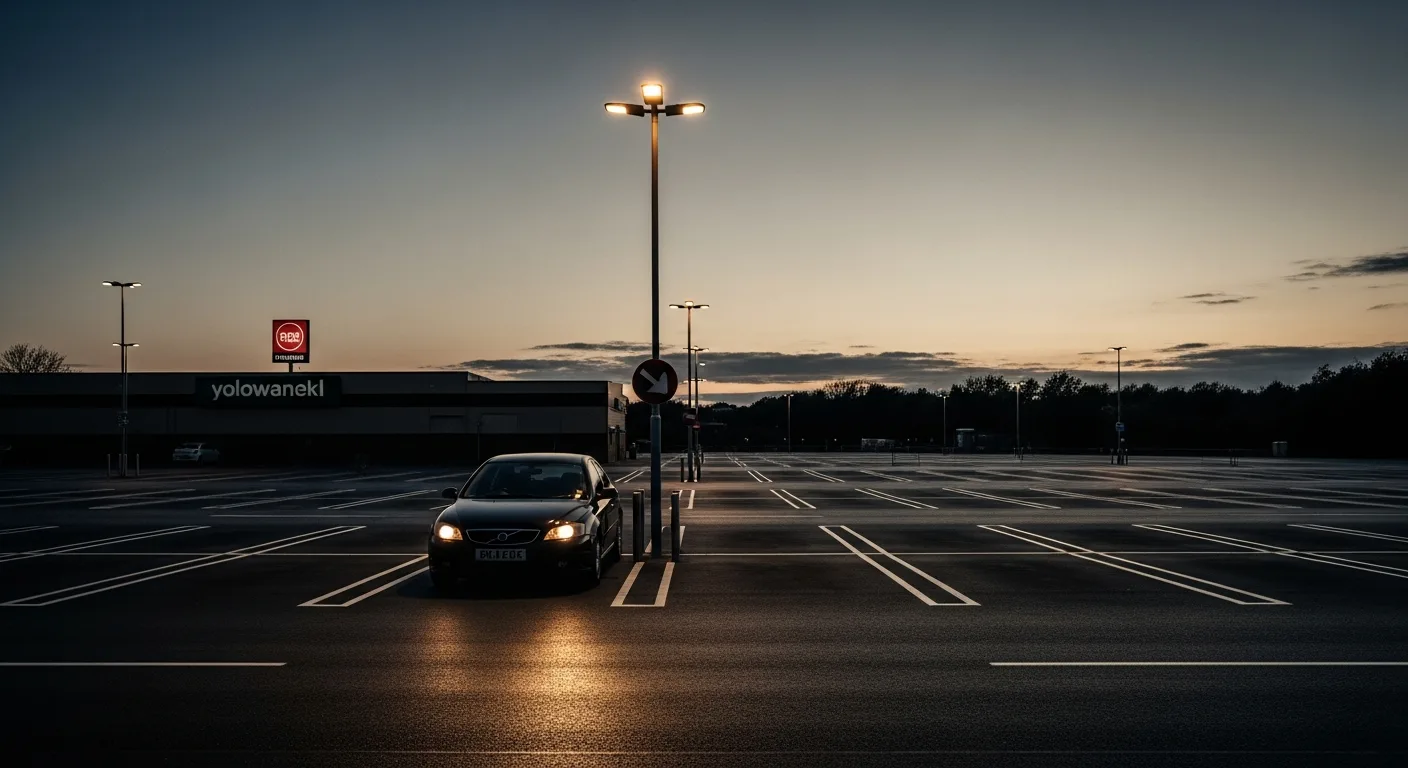
Your car spends the overwhelming majority of its life parked — and that's when it's most defenceless. The trolley dink, the misjudged parallel park, the clipped wing mirror: no witness, no note, and the repair lands on you. Parking mode is the dash cam feature built for exactly those hours, and it's also the feature surrounded by the most confusion about what it does and what it needs. Let's fix that.
What parking mode actually is
Parking mode keeps the camera in a low-power watch state after you lock up. Rather than filming your parking space continuously for hours, the camera waits for a trigger — typically a G-sensor jolt (something touched the car) or, on some models, motion in frame — then wakes and records a protected clip around the event. The result: come back to fresh damage and, instead of a mystery, you have a timestamped clip of the impact and, with luck, the vehicle responsible.
Buffered vs wake-on-impact
- Wake-on-impact (the common approach): the camera sleeps, the jolt wakes it, recording starts within a moment. You capture the aftermath — often enough, since the offending car takes seconds to disentangle and leave.
- Buffered parking mode (on higher-end or battery-assisted setups): the camera quietly holds a rolling buffer, so the saved clip includes the seconds before the impact. Better evidence, higher power draw.
The Nextbase 622GW's Intelligent Parking Mode is of the wake-on-event kind: parked and unattended, an impact wakes it to record what's happening around the car.
The power question (this is the important bit)
Everything about parking mode hinges on one fact: the engine is off, so the camera must draw power from somewhere. Your options, honestly ranked:
- Internal camera battery/capacitor alone: enough for minutes of protection, not hours. Capacitors (fitted for heat tolerance) power safe shutdowns, not overnight watch. If a camera promises all-night parking mode with no wiring, read the small print.
- Hardwiring with voltage cut-off: the standard answer. A £20–£40 kit feeds the camera from the fuse box and cuts off before the car battery runs low — the full picture is in the hardwiring guide. Overnight and workday protection, zero battery anxiety when set up properly.
- Dedicated battery pack: a separate rechargeable pack that charges while driving and runs the camera while parked. Costs more (£100+), completely isolates the car battery, suits cars that sit for days or have fragile electrics.
Practical corollary: if you park on a driveway with the car in sight, the socket-powered setup you already have may be all you need. If the car lives on the street, budget for the hardwire kit at purchase time — it's the difference between owning the feature and owning the checkbox.
What parking mode realistically captures
Set expectations like an adult and the feature delivers:
- Impacts, reliably. The G-sensor doesn't sleep through contact. You'll get the moment and its aftermath — vehicle, colour, direction, often the plate as it pulls away, especially with decent resolution and a rear camera covering the bumper that actually gets hit.
- Night incidents, within limits. A dark car park challenges any sensor; look for cameras with strong low-light modes, and park under lighting when you can — advice that overlaps with the night footage guide.
- Not: a guarantee. An angled glancing blow at the far rear corner of a long car can sit outside a front camera's view. Parking mode raises your odds dramatically; it doesn't repeal geometry.
Settings worth two minutes
- G-sensor sensitivity: too low misses gentle contact, too high logs every passing lorry's rumble. Start at medium; adjust if your card fills with phantom events.
- Cut-off voltage/timer (hardwired setups): conservative settings if the car does short journeys or sits for days.
- Check protected clips occasionally. Parking events save as locked files; if the card is crowded with them, review, clear, and re-tune sensitivity — part of the monthly habit.
Insurance and the law, briefly
A parking-mode clip converts "unattributed damage on my own policy" into "identified third party" — the financial difference is spelled out in dash cams and insurance. Legally, recording around your parked car is unremarkable for private drivers; the nuances (private land, published footage) live in the privacy guide.
The short version
- Parking mode = event-triggered recording while parked — impacts wake the camera, clips are protected automatically.
- It needs a power plan: hardwire kit with cut-off for most, battery pack for the cautious, socket-only for driveway parkers.
- Expect identification of impacts, not omniscience; tune sensitivity once and let it work.
Cars get damaged where they sleep. For street parkers especially, parking mode is less a luxury feature than the second half of what a dash cam is for.